
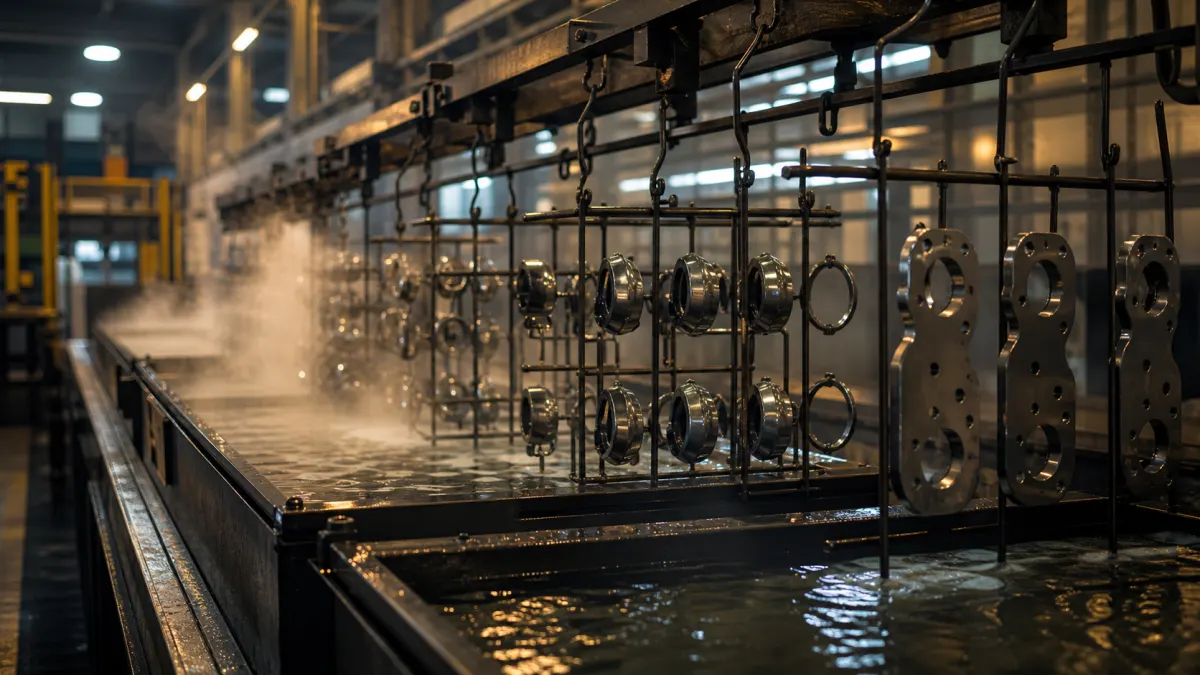
Electroplating
Electroplating as a manufacturing capability for parts and components.
Electroplating parameters depend on the material, part geometry, required result and process limitations. Exact coating types and process conditions are agreed after the requirement is reviewed.
Need a Production Assessment?
Send a drawing, 3D model, sample or short description. We will clarify the parameters and advise on the next steps.
Electroplating
What Is Electroplating?
Electroplating is an electrochemical process in which a thin layer of one metal is deposited on the surface of another. The coating can protect the base material, change surface properties or provide the required appearance.
The process parameters depend on the base material, part geometry, intended result and technological limitations. Exact coating options are confirmed after the technical requirement has been reviewed.
Process principle
How Electrochemical Deposition Works
The part is placed in an electrolyte and connected as the cathode. The coating metal acts as the anode. When current is applied, metal ions move through the solution and form a layer on the prepared surface.
Layer thickness and structure are controlled through current, temperature, solution condition and processing time.
Benefits
Purpose and Benefits
Electroplating changes the surface properties of a part while retaining the characteristics of the base material.
- Protection of the metal surface from moisture and corrosion.
- Improved wear resistance for parts exposed to friction.
- A controlled decorative or technical surface finish.
- Longer service life under the intended operating conditions.
- Restoration of worn surfaces where the selected process permits it.
- Efficient use of a thin functional layer on a structural base material.
Coatings
Types of Electroplated Coatings
The suitable coating is selected after the part, material and operating requirements have been reviewed.
Zinc Plating
A commonly used protective coating for steel parts.
Nickel Plating
Used where surface protection, wear behaviour or appearance is important.
Chrome Plating
Can provide a hard surface and reduced friction for suitable applications.
Copper Plating
Can improve conductivity or serve as an intermediate layer.
Tin Plating
Used for selected electrical and soldering applications.
Anodising
An electrochemical surface treatment for suitable aluminium alloys.
Applications
Application Areas
Electroplating can be used for parts and components in different industrial sectors.
Mechanical and Automotive Engineering
Shafts, pistons, brackets, fasteners and other technical parts.
Electrical Engineering
Busbars, terminals, contacts and conductive components.
Construction
Anchor bolts, brackets and facade-system fasteners.
Hardware
Locks, hinges, handles and furniture fittings.
Industrial Fasteners
Nuts, screws, studs and other serial hardware.
Materials
Materials for Electroplating
The process mode is selected for the base material and required result.
Process
Technological Stages
A typical production route includes five controlled stages.
01
Preparation
Cleaning, degreasing and surface preparation according to the base material.
02
Loading
Parts are secured on fixtures and placed in the process bath.
03
Deposition
The calculated current is applied and the coating layer is formed.
04
Inspection
The processed surface and layer parameters are checked.
05
Finishing
Parts are rinsed, given the required final treatment and dried.
AMF Production
AMF Production Capabilities
Send the part description, base material, drawing or photo and the expected result. The production team will review the input data and confirm the applicable process parameters.
FAQ
Frequently Asked Questions
What is an electroplated coating used for?
It is a thin electrochemically deposited metal layer used to protect the base, change surface properties or provide the required finish.
Which coating types are available?
The exact coating options are confirmed after the part, base material and technical requirements have been reviewed.
Which materials can be processed?
Potential base materials include carbon and structural steels, stainless steel, cast iron, aluminium, brass and copper. Feasibility depends on the requested process.
Can electroplating protect against corrosion?
Suitable coatings can reduce contact between the base metal and the environment, helping to limit corrosion.
How long does the process take?
Lead time depends on quantity, part geometry, surface preparation and the selected process.
Can serial batches be processed?
Serial processing can be considered after the part and batch parameters have been reviewed.
How is coating quality checked?
Inspection methods are selected according to the coating and technical requirements.
How is the price calculated?
The calculation depends on surface area, preparation, layer requirements and quantity. Send the technical data for an assessment.